What are the best dates in the world?
Ajwa, Medjool, Sukari, or Deglet Nour: rather than a universal ranking, here is a method for choosing dates that suit your intended use and budget.
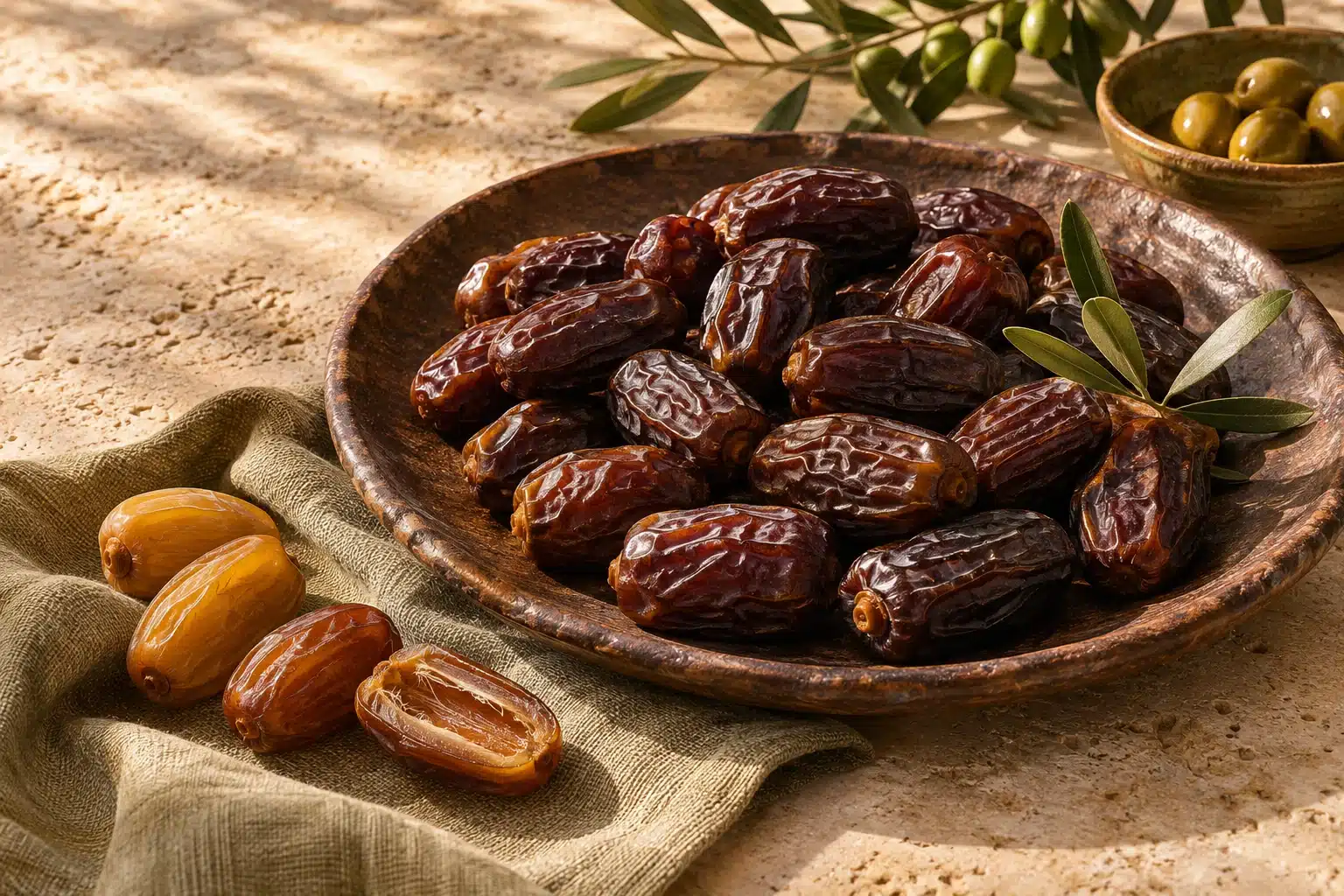
Ajwa, Medjool, Sukari, Deglet Nour: four options
Variety names give you an initial guide, not a guarantee about a specific batch. Ripeness, sorting, and storage can change the experience from one product to another.
| Variety | To start comparing | What to check in the offer |
|---|---|---|
| Ajwa | Explore products of this variety and their stated origin. | Origin, net weight, packaging, and seller identity. |
| Medjool | Compare pack sizes, stated fruit size, and intended use. | Quantity, price per kilogram, whether pits are present, and storage. |
| Sukari | Discover another variety and look at how the product is presented. | Fruit condition, packaging, and instructions after opening. |
| Deglet Nour | Compare whole or pitted products according to your needs. | Ingredients, stated origin, weight, and any additions. |
Ajwa: check the product beyond its name
If you are looking for Ajwa dates, examine the origin information and the product label. A marketing statement in a photograph is not enough on its own to establish an origin or superior quality.
You can start by looking at an Ajwa product in a 500 g pack, then checking its details with the retailer.
Medjool: look at pack size and fruit size
A large box may suit regular consumption; a smaller pack may be more practical for trying a product. The word “premium” or an impressive size in a photo does not replace product information.
Explore Medjool products by comparing quantities and storage conditions.
Sukari: discover the variety without buying too much
For a variety you are less familiar with, a small quantity lets you check whether it suits you before stocking up. Compare offers using the same criteria as for Ajwa or Medjool.
Browsing the Sukari selection lets you see the available pack sizes.
Deglet Nour: consider how you will prepare them
Whole and pitted dates do not require exactly the same preparation. If you plan to blend them, allow for removing the pits and adjust the texture according to the recipe's instructions.
Start with how you want to use them
Before looking for “the best dates in the world,” ask yourself three simple questions: do you want to enjoy them on their own, cook with them, or store them to eat over time?
- To enjoy on their own: choose a package size that lets you try a product and decide what you like.
- For cooking: check whether they have pits, how much you need, and the texture the recipe calls for.
- For regular consumption: consider the available refrigerator space and the storage time after opening stated on the package.
A large box is only good value if you can use and store its contents properly.
Criteria for comparing two offers
- Identify the exact variety. Avoid comparing different products based only on their photos.
- Check the net weight. The size of the box or the number of compartments can be misleading.
- Calculate the price per kilogram. Divide the product price by its weight in kilograms, then account for shipping separately to compare the total cost.
- Read the ingredients. Do not assume a product has no added ingredients just because it looks like a plain date.
- Check the seller and storage instructions. Review the stated origin, available batch information, delivery details, and instructions after opening.
An example of a price-per-kilogram comparison
A 500 g box priced at €8 works out to €16/kg before shipping. A 1 kg box priced at €15 costs €15/kg before shipping. This calculation is an educational example, not an observed price or a current offer.
The calculation does not mean the second box is better quality: it only puts the quantities on the same basis.
Origin, labeling, and marketing claims
The seller’s country, the shipping location, and the fruit’s origin are three different pieces of information. Look for the stated origin in the product listing and on the packaging rather than inferring it from the store’s name.
Words such as “luxury,” “royal,” or “premium” are not an independent ranking. If a certification or label is claimed, check what it applies to and what information identifies it.
After buying: storing and preparing your selection
A product you enjoy also deserves proper storage. Keep the manufacturer’s instructions and consult our guide to when dates should go in the refrigerator.
If the fruit has simply become too firm for your recipe, you can learn how to soften dates that are too dry. This method is not intended to salvage fruit showing signs of spoilage.
Frequently asked questions
What are the best dates in the world?
There is no universal winner. Your preference depends on the specific product, its texture, how you plan to use it, and your budget. This guide offers selection criteria, not a ranking based on a comparative tasting.
Are the most expensive dates the best?
A high price alone does not establish better flavor quality. Compare the variety, net weight, origin information, packaging, and seller.
Should you choose pitted dates?
Pitted dates can simplify some preparations. Read the product instructions and check the fruit before blending: culinary use matters as much as presentation.
How do you present the products you feature?
Our pages let you explore offers and selection criteria. We do not present these products as if our editorial team has tested or tasted all of them.
This is a comparison guide, with no invented tasting notes or medical rankings. Prices, features, availability, and terms still need to be checked with the seller. Some links on the site may generate a commission on qualifying purchases.